


The Hot Water System Upgrade That Could Power Your Car for Free
But it’s pretty much a safe bet that almost no one feels passionate about their hot water system. Yet this unsung, often unseen appliance is secretly waging war on your wallet.
This overlooked appliance is one of the most significant energy consumers in the average home. It's typically responsible for around 30% of a household's total energy use.
The good news is that understanding this appliance and its modern alternative, the hot water heat pump, unlocks surprising efficiencies and significant savings.
By looking closer at the "dumb" versions of this appliance, you can take one of the single most impactful steps toward reducing your energy bills.
Australian Hot Water Systems: Your Smart Choice Guide
For homeowners especially, understanding the different types of hot water systems is the first step toward making a smart, long-term decision that will affect your home's running costs.
1. Traditional Hot Water Systems: The Common Options
These are the systems most commonly found in Australian homes today. They rely on directly creating heat by burning a fuel or using a simple electric element. Let's start with the most common electric system.
1.1. Electric Storage Systems
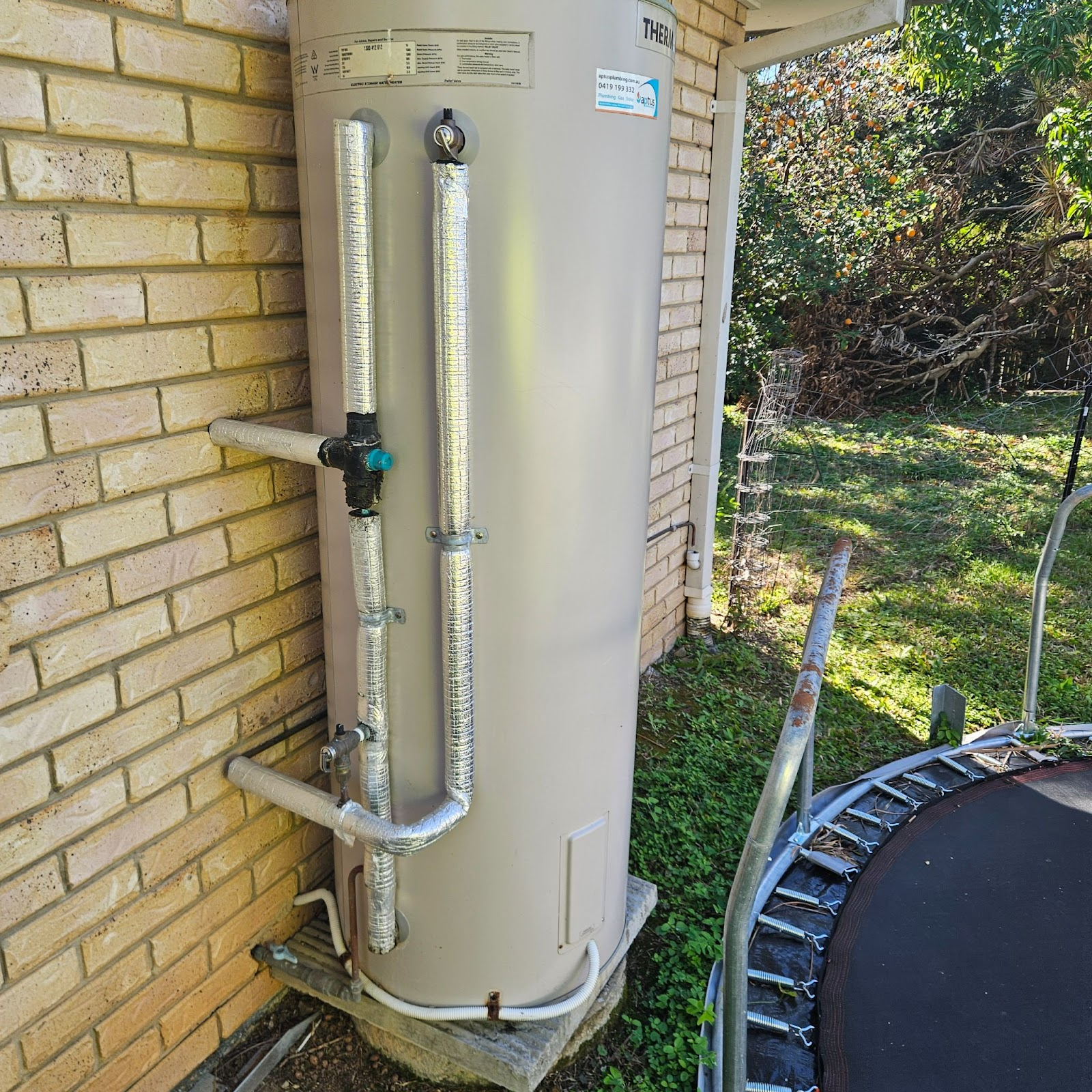
- What It Looks Like: A large insulated tank, typically holding between 250 to 400 litres of water.
- How It Works: It functions like a giant kettle. A resistive electric element inside the tank heats the water and works periodically to keep the entire volume of stored water hot and ready for use.
- Energy Efficiency: A typical household using this system consumes around 4,000 kilowatt-hours (kWh) per year for water heating.
1.2. Gas-Powered Systems (Storage and Instantaneous)
- What They Look Like: Gas heaters come in two main varieties:
- Gas Storage: A tank that is generally smaller than an electric one, holding between 140 and 250 litres.
- Instantaneous Gas: A tankless unit, often seen as a compact box on an exterior wall. It uses a fan to create a "raging inferno" inside, heating water on demand.
- How They Work: Both systems operate by burning gas to heat water. The key difference is that one stores a large volume of hot water, while the instantaneous (or "inline") model heats the water only as it flows through the unit.
- Energy Efficiency: For a typical household, both gas storage and instantaneous gas systems use an energy equivalent of around 5,000 kWh per year.
While common, these traditional systems have been surpassed by newer, far more efficient technologies.
2. Modern & High-Efficiency Water Heaters
Modern systems are designed to dramatically reduce energy consumption by either harnessing renewable energy directly or using advanced technology to move heat instead of creating it.
2.1. Solar Thermal Systems
- What It Looks Like: These systems are identifiable by the collectors on the roof, which are either flat plates or evacuated tubes. They come in two primary configurations:
- Close-coupled: The classic "Solarhart" design where the storage tank is mounted on the roof alongside the collectors.
- Split system: A more modern approach with only the collectors on the roof. The storage tank is located on the ground and connected by a pump that circulates the water.
- How It Works: A solar thermal system uses the sun's radiation, captured by the collectors, to heat water directly.
- Energy Efficiency & Drawbacks: The performance of solar thermal systems drops significantly in colder climates or during winter. They require a temperature differential to work, meaning the collectors must be hotter than the water to add any heat. Furthermore, the roof-mounted collectors are vulnerable to hail damage.
-
2.2. Heat Pump Hot Water Systems
- What It Looks Like: Heat pumps generally come in two "flavors":
- All-in-one: A single unit consisting of a water tank with a "little top hat" on it, which houses the heat pump mechanism.
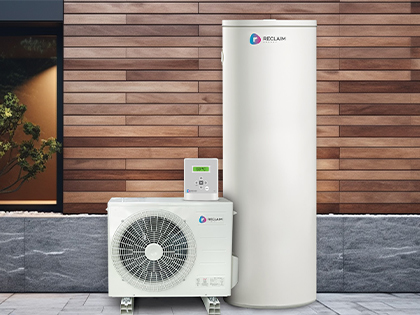
- Split system: This configuration looks like a standard hot water cylinder paired with a separate rectangular box on the ground, similar in appearance to an air conditioner's outdoor unit.
- How It Works: The core concept is simple: a heat pump doesn't create heat, it moves it. It works like an air conditioner in reverse, using a fan and radiator to pull latent heat from the surrounding air and efficiently transfer it into the water inside the tank.
- Energy Efficiency: This is the most energy-efficient water heating technology available. A heat pump can reduce the energy used for water heating by three-quarters compared to a standard electric storage system.
The efficiency of heat pumps is so remarkable, it's worth understanding exactly how this 'magic' works.
This 75% reduction is most critical in winter. During the coldest months, your hot water demand can double, while your rooftop solar generation drops by two-thirds.
This creates a significant energy shortfall that forces you to buy expensive power from the grid. A heat pump solves this winter problem. By slashing your water heating energy needs, it allows your limited winter solar generation to cover your demand, making your home truly energy-independent year-round.
So, what does saving 8 kWh every day really mean?
That daily energy saving is enough to drive an average electric vehicle approximately 15,000 km over the course of a year, roughly the average distance an Australian drives annually.
A Hot Water Heat Pump is Not New Magic, It's Just Clever Physics
Many people assume that a heat pump water heater is some new, unproven technology. The reality is far simpler.
A heat pump doesn't create heat from scratch; it simply moves heat from the outside air into the water stored in its tank. It’s the exact same fundamental technology found in a reverse-cycle air conditioner, an appliance that has been common for decades.
The efficiency of this process is measured by its Coefficient of Performance (COP). A high-performance heat pump might have a COP of anywhere between 3-6. This means that for every 1 kWh of electricity it consumes, it successfully moves 3-6 kWh worth of heat into the water.
This is where the concept of it being "four times more efficient" than a standard electric heater comes from. Instead of using massive amounts of electricity to heat a resistive element (like in a kettle), it uses a small amount of electricity to run a compressor and fan to harvest free heat from the ambient air.
The Energy You Save Could Power Your Electric Car for a Year
To truly grasp the impact of upgrading your water heater, it helps to connect the savings to another major household expense: transportation. The numbers are surprisingly direct.
According to Karl Jensen's calculations on his recent appearance on the The Shameless Plug Podcast with Saul Griffith, the 8 kWh of energy saved every day by switching from a traditional electric storage water heater to a heat pump adds up quickly. Over a year, that saved energy is enough to drive a typical electric vehicle 15,000 kilometers. This isn't a random number; it's roughly the average distance an Australian drives annually.
The financial implications are just as powerful. Jensen estimates that this is equivalent to “saving around "$3,000 worth of petrol" per year. A single appliance upgrade doesn't just lower your electricity bill, it can effectively eliminate the fuel cost for your family's primary vehicle. It's a powerful demonstration of energy fungibility; by optimising one system, you can effectively solve a completely different, and far more expensive, problem.
What Will You Do With Your Saved Energy?
The upgrade to hot water heat pumps moves the water heater from being a "dumb" energy monster to a sophisticated asset that provides significant benefits to the household and the entire electricity grid.
Key attributes of “smart” heat pumps:
Demand Flexibility and Grid Support
The primary benefit of upgrading to a smart heat pump is unlocking demand flexibility (FD). Hot water systems, which account for about a third of household power load, can function as a thermal battery, storing heat until needed, similar to a standard home battery (a 300-litre domestic hot water (DHW) system can store about 15 kWh of energy).
The integration of smart functionality enables two key types of management:
1. Passive Management: This relies on simple measures like timers or predetermined ripple control times set by distribution networks.
2. Dynamic Management (Smart Operation): This is facilitated through WiFi or other controls that can be adjusted in response to changing grid conditions or market signals.
This flexible demand capacity is crucial for resolving the mismatch in the energy system where there is abundant rooftop solar generation during the middle of the day, but peak demand occurs in the evening (4 pm to 8 pm). Dynamically managing Hot water systems allows them to function as a "solar sponge," shifting water heating demand from the evening peak to the solar middle of the day.
• Dynamic Control Mechanisms: Smart HWS should be equipped with modern approaches that ensure consumers retain control (including the ability to override management), be interoperable (able to communicate with HEMS or other devices), and support secure two-way communication.
• Utilising Cheap Energy: A HEMS enables the dynamic control of the HWS in response to market signals, such as taking advantage of retailer "solar sponge" tariffs offering cheaper electricity during the day, or heating water during periods of negative wholesale prices (e.g., when offshore wind generation is high).
• Virtual Power Plants (VPPs): A smart HWS can be connected to a HEMS, allowing it to be aggregated into a VPP, providing orchestrated grid services.
However, achieving the full benefits of dynamic management requires policymakers and the market to ensure new systems are efficient, smart, and secure.
The upgrade to a smart hot water system sets the stage for full household electrification, ensuring that consumption is synchronised with growing variable renewable energy supply, thereby lowering bills for the owner and all electricity system
Hot Water Heat Pump Efficiency: Powering Batteries, Monetising Grid Flexibility
Focusing on the efficiency of heat pump hot water systems (HPHWS) is a crucial step that supports the use of electrical home batteries by minimising household energy load, which is cheaper than storage alone.
This high efficiency appliance allows households with rooftop PV systems to maximise self-consumption of cheap daytime solar energy, as the lower energy requirement means the PV system could potentially provide all water heating needs.
Where PV export is constrained or tariffs are low (e.g., 5c/kWh export tariff or zero export limit), routing excess solar energy into the highly efficient heat pump or the electrical battery for later use maximises the financial benefit, preventing the energy from being exported cheaply or wasted through curtailment.
Dynamically managed hot water heat pumps and batteries work together within a Home Energy Management System (HEMS) to take advantage of favorable market conditions. This includes utilising "solar sponge" retail tariffs that offer cheap or even free electricity during the middle of the day, when renewables are abundant and wholesale prices may be negative and sell during evening peaks.